
Documentary vs Narrative Film: What’s the Difference?

There are many ways to tell a story. Two of the most common are documentary and narrative film. They’re both powerful, but they work in completely different ways.
If you’ve ever wondered what separates them, here’s a simple breakdown.

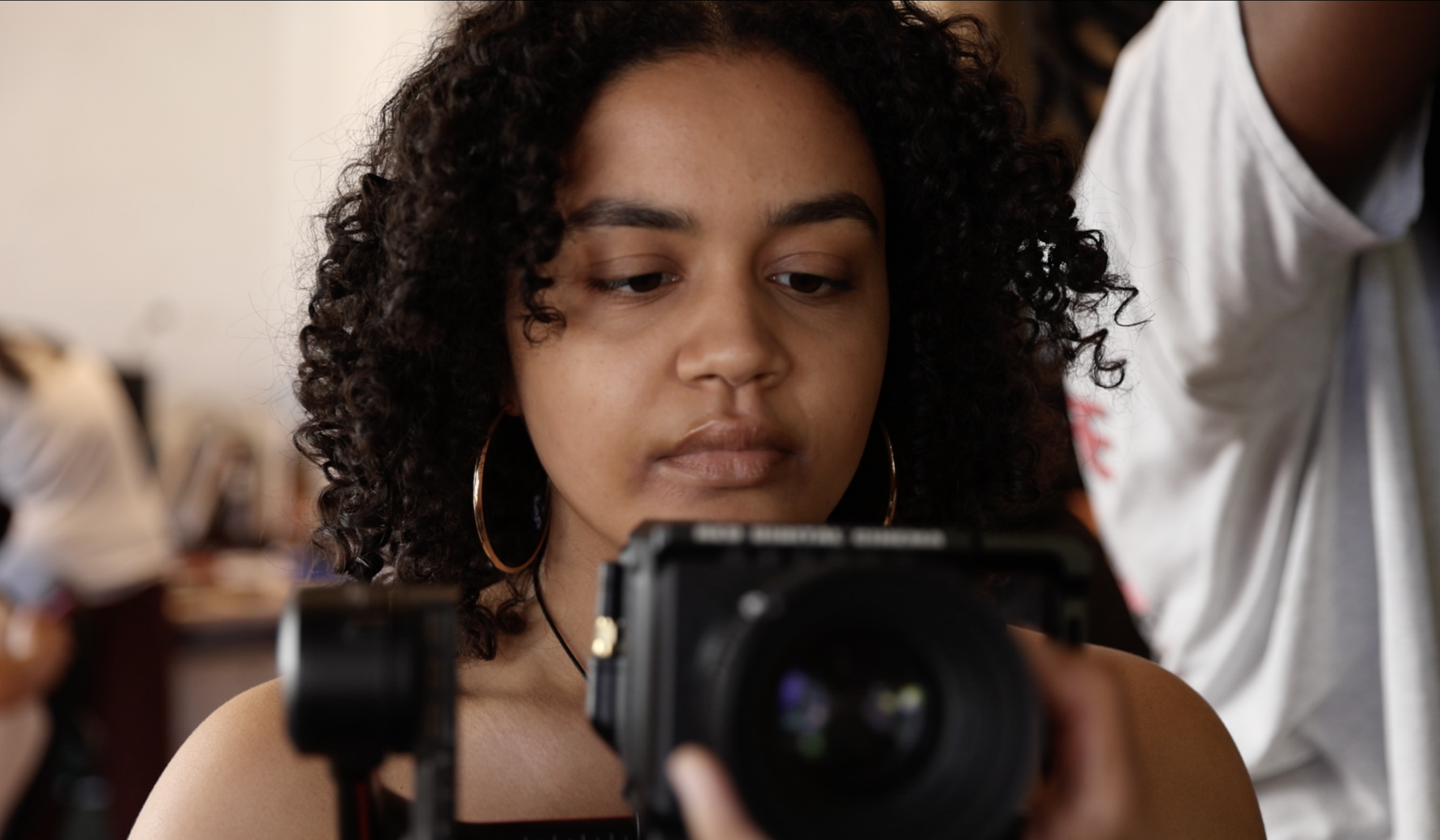
Doc Lab alumni, Kami Cooper, interviewing for Kami’s Awesome Hip Hop Doc
What is a Documentary Film?
Documentaries are about real people and real events. The goal is to inform, educate, or help the audience understand an issue.
Factual: Stories are based on reality, not fiction.
Unscripted: You can plan what you want to cover, but the story often shifts while filming.
Real people, not actors: “Characters” are just being themselves in the moment.
Limited control: Filmmakers capture what’s happening rather than staging scenes.
Editing for clarity: Editors shape interviews, found footage, and real-life moments into a story, often adding voiceovers, graphics, or text for context.
“The Dual Language Doc Lab program has changed how I see myself and my Latino community. It’s inspiring to know there are other young Latino creatives who want to tell their stories in genuine ways.”
BTS of EROTOMANIAC, directed by Oonagh Dougal, Narrative Lab Alumni and Youth Ambassador
What is a Narrative Film?
Narrative films are fictional stories. They might be inspired by real events, but they’re designed to entertain.
Scripted: The story, dialogue, and character arcs are written in advance.
Actors in roles: Performances are planned and rehearsed.
Full control: Filmmakers decide everything: sets, lighting, even the weather if they can.
Structured editing: Scenes follow a pre-determined script from start to finish.
Audiences go into narrative films expecting to be moved, entertained, or swept away into a different world.
“Before Reel Works, I focused on post-production. Now I understand character development, screenwriting, and pre-production — it’s been a huge help.”
Quick Comparison
| Documentary | Narrative | |
|---|---|---|
| Source | Real events and people | Fictional or dramatized events |
| Script | Unscripted, story evolves | Scripted from the start |
| People | Real individuals | Actors playing characters |
| Control | Limited over events | Complete over every detail |
| Audience Goal | Learn and connect | Be entertained |
Why This Matters for Filmmakers
Choosing between documentary and narrative changes how you work and how audiences respond.
Documentaries are powerful when you want to share truth and give people a closer look at real lives or issues.
Narrative films work best when you want full creative control to build a world and guide the audience exactly where you want them to go.
Both forms can inspire, move, and inform. But in very different ways.
Curious how each style looks on screen? Watch student films from Reel Works’ Teen Filmmaking Lab and Documentary Lab to see how young storytellers bring both approaches to life.
Stay tuned for important updates about our Narrative and Documentary Lab programs.
And if you believe in our mission, make a donation to Reel Works to help the next generation of filmmakers share their stories.